Tuesday, December 4, 2012

Jeff Seal Homes


Visiting the houses designed by Jeff Seal Homes of Distinction was my favorite field trip of the year! Mainly because I am totally jealous of people that get to live in houses that big and I cannot wait to be able to design something like that myself! However, I also think it was one of the best learning experiences we had. It was a great opportunity to be able to see all the small features that have to be considered when actually constructing something that has been designed on paper. There were also many things that I had already learned in class that I got to see being applied in real life construction; such as the important and incredible difference that wall thicknesses can make.
Jeff Seal and his team, work really hard to create a home that the client will love. He explained that most of the houses they design are extremely unique and designed to follow certain styles that the customers request. The extensive details incorporated in the homes are also based on the style that the customer desires. The team expressed many times that they try to stay entirely “true” to the specific style of an architect, designer, or era that has been called for by the client. Seal also explained that though all the homes are customized and luxurious, they range in complexity, size, and cost.
I really enjoyed being able to hear what former Texas Tech students had to say about their experiences, opportunities, and challenges that they now face in their careers. Emily and Abby gave great advice and tips to remember when dealing with difficult clients or clients that may not agree with the ideas of the designer. They seemed to really enjoy their jobs and were very reassuring that all our hard work would eventually pay off. It was really exciting to see some of the amazing houses they are designing so early in their careers! Though the houses were very large and extravagant, they were not particularly my style. However, that did not take away from the learning experience. After all, being able to respect a clients taste and meet their desires is part of the job. 

Friday, November 30, 2012

Collins Tile and Stone


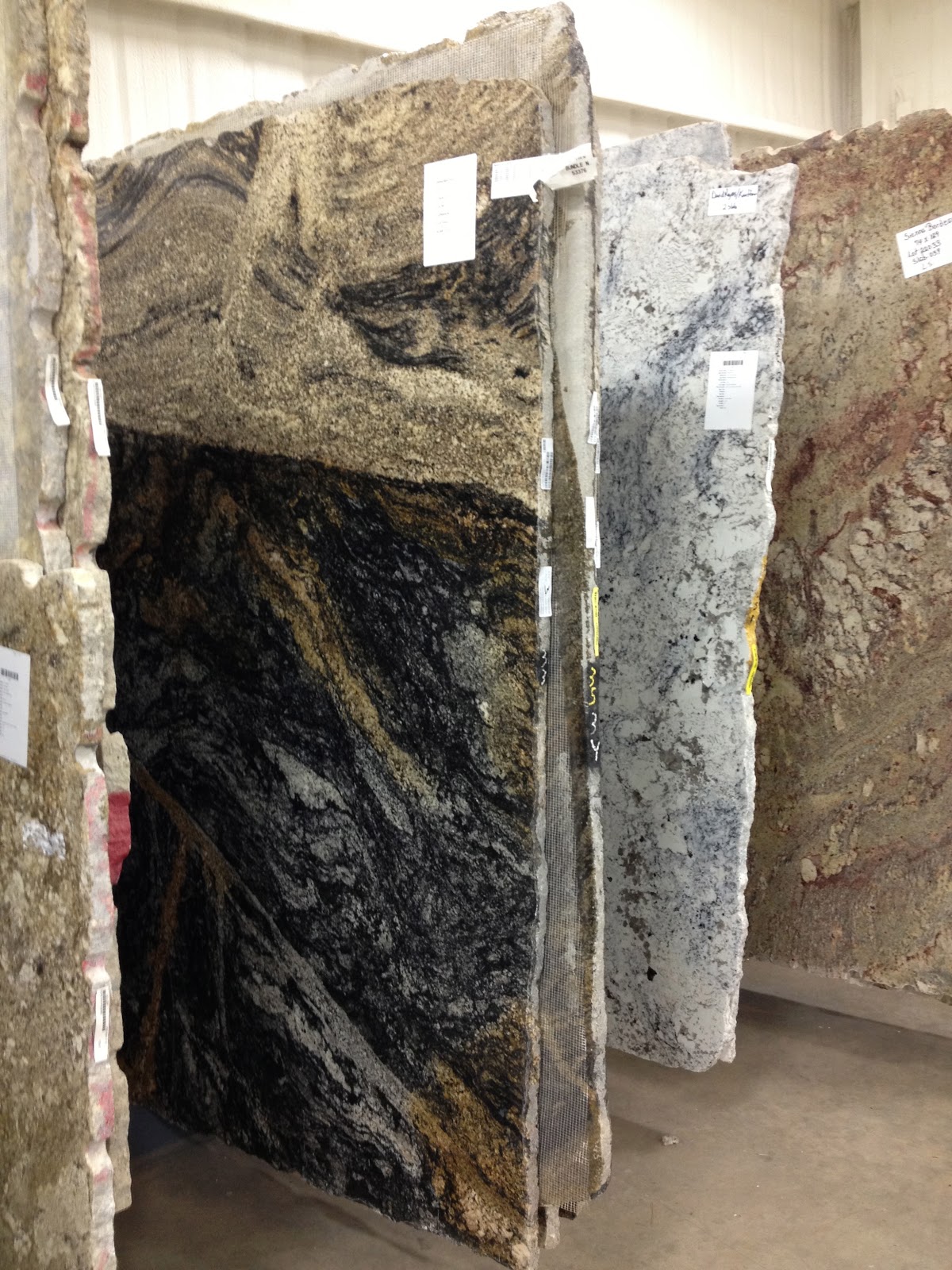
Collins Tile and Stone!!! A piece of granite in the back storage room.

Drastic color change on slab of granite! Reason why you have to careful when choosing a color - colors may vary!

Thicknesses and smoothness vary.

The back side of a piece of granite. 

Leftwich Chapman


Leftwich and Chapman was a really 
great experience in learning about wood,
carpet, leather, cork, and other flooring materials.
'


 Creative wood flooring
 using small pieces of                                                                 different colored wood.


Wood chunks that
are used for walls!!


Light colored wood.


Photo Analysis

Katherine and I used this picture of palm trees and the shore line as our inspiration picture when designing the bathroom for color project 2. We chose this picture to illustrate the repetition, rhythm, and balance of colors and items that we incorporated in the bathroom. The picture also includes the color scheme we decided on (green, blues, and browns). Together, all these things create a peaceful and comfortable look, giving the bathroom a spa-like feel.

Monday, October 29, 2012

Unusual Building Material - Shipping Containers!


Shipping Containers Used as a Building Material
People believe that like many things sold in the United States, shipping containers were made in China, however, this is not true. Malcolm McLean, an American man, created and patented the very first shipping container in 1956 (All About Shipping Containers, 2010).
Before McLean all cargo was boxed in wooden crates made of odd sizes, making the process of loading and unloading very slow and inconsistent. After 20 years of observing this slow and unorganized process, McLean decided he would create a better system to transport cargo to ships and warehouses. After purchasing the Pan Atlantic Tanker Company and renaming it the Sea-Land Shipping Company, McLean was able to experiment and create a better transportation and delivery container than the crate. His final design is now known as the Shipping Container. The Shipping Container is strong, durable, left resistant, stackable, and easy to load, unload, ship, transport, and store (All About Shipping Containers, 2010)
On November 23, 1987, Phillip C. Clark became the first man to file for a United States patent for a “Method for converting one or more steel shipping containers into a habitable building at a building site and the product thereof”.  The patent was granted on August 8, 1989.  Then, in 2006, Southern California architect Peter Maria designed the first two-story shipping container home to exist in the United States. (Pagnotta, 2011).
Shipping Container architecture is widely approved and encouraged as a trendy green alternative to traditional building materials. Shipping container homes are considered a fast, green, and sustainable approach to building. Due to the fact that the Intermodal Steel Building Unit’s (ISBU) are manufactured in a factory-controlled environment, they are considered to be standardized and reliable. Home builders save time, money, and wood by using a product that is manufactured, pre-fitted for installation, and structurally complete. Shipping containers, or building units, also have outstanding fire and safety ratings and tremendous sustainability and strength (Pagnotta, 2011).

Design Expo

During the Design Expo we got to explore lots of new materials and furnishing. I was really impressed by many of things that were being offered. However, my favorite material from the Design Expo is the Clarus Glassboards. Glassboards are made from 1/4" thick tempered safety glass so they are very stronger than normal glass and can last a long time. Another great thing about Glassboards is they can be written on in almost any type of marker, even sharpie! Simply using windex will remove any marker from the surface without leaving any scratches (I know because I tried it). Erasing on whiteboards can often be challenging because shadows from writings will remain. When using Glassboards, everything comes off very easily. Glassboards can also come with a magnet on the back or a logo design, making them great for business areas. In addition, Glassboards can come in a variety of shapes, sizes, and colors to help correspond with the area in which it is being placed. 

Wednesday, October 3, 2012

Campus Materials


Fiber based art is easy to find because we have flags located all over campus. The flags help show school spirit while still adding to the design of the room.


Flooring! The grey carpeting is great for the SUB because it is dark enough to hide spills, dirt, or any other messes. And the square patterns coordinate with the ceiling tiles, which helps bring the room together. The mats by the doors are a great way of helping keep dirt out. They are also removable which makes them very easy to replace when they get dirty.


Two different types of panel systems! 
Both very modern looking. The metal ceiling panels keep the room looking clean and sheik without adding too much color or overwhelming patterns. The panel systems behind the sofas help control noise and add privacy to the area.
Two great examples of seating! Both are clean, well upholstered, and in good condition! 
The chair is very casual seating located in the Student Union Building and the sofa is more formal seating found in the Merket Alum Center - both appropriately upholstered for durability and looks!